
 King’s College London
Toothpaste made from your own hair could help repair and protect damaged teeth, researchers say.
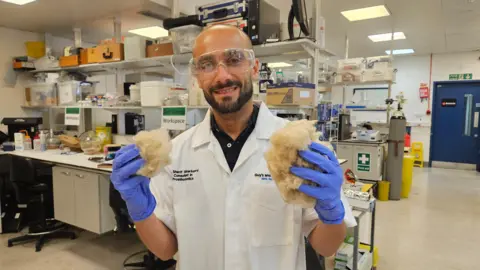
Scientists from King’s College London (KCL) found that keratin – a protein found in hair, skin and wool – can repair tooth enamel and stop early stages of decay.
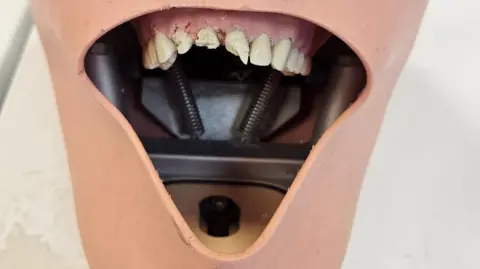
Their research revealed that keratin produces a protective coating that mimics the structure and function of natural enamel when it comes into contact with minerals in saliva.
Sara Gamea, PhD researcher at KCL and first author of the study, said: “Keratin offers a transformative alternative to current dental treatments.”
 King’s College London
She added: “This technology bridges the gap between biology and dentistry, providing an eco-friendly biomaterial that mirrors natural processes.
“Not only is it sustainably sourced from biological waste materials like hair and skin, it also eliminates the need for traditional plastic resins, commonly used in restorative dentistry, which are toxic and less durable.”
In their study, published in Advanced Healthcare Materials, the scientists extracted keratin from wool.
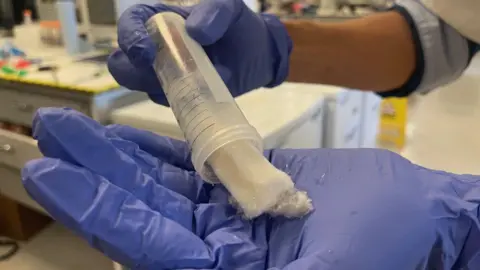
They discovered that when keratin is applied to the tooth surface and comes into contact with the minerals naturally present in saliva, it forms a highly organised, crystal-like scaffold that mimics the structure and function of natural enamel.
Over time, this scaffold continues to attract calcium and phosphate ions, leading to the growth of a protective enamel-like coating around the tooth, according to researchers.
Acidic foods and drinks, poor oral hygiene and ageing all contribute to enamel erosion and decay, leading to tooth sensitivity, pain and eventually tooth loss.
 King’s College London
Dr Sherif Elsharkawy, senior author and consultant in prosthodontics at KCL, said: “Unlike bones and hair, enamel does not regenerate, once it is lost, it’s gone forever.
“We are entering an exciting era where biotechnology allows us to not just treat symptoms but restore biological function using the body’s own materials.
“With further development and the right industry partnerships, we may soon be growing stronger, healthier smiles from something as simple as a haircut.”
Source link

Khamrah by Lattafa for Men - 3.4 oz EDP Spray
4% Off
Ghost Sweetheart Eau de Toilette | Pineapple, Jasmine and Sandalwood | Perfume for Women 50 ml
50% Off
Marc Jacobs Dot Eau De Parfum for Women, 100 ml
42% Off
Ted Baker W Eau de Toilette for Her, Fig Leaf, White Peony and Violet Top Notes, Pink Orchid and Raspberry Middle Notes, 75ml
£11.77 (£15.69 / 100 ml) (as of 13/06/2026 03:32 GMT +01:00 - More infoProduct prices and availability are accurate as of the date/time indicated and are subject to change. Any price and availability information displayed on [relevant Amazon Site(s), as applicable] at the time of purchase will apply to the purchase of this product.)
Ted Baker Woman Pink Eau de Toilette Spray Floral Green Feminine Fragrance, Opening Notes are Fresh Peach, Bergamot and Tangerine with Warm Musk, Vanilla and Vetiver Base, 100ml
11% Off
Vera Wang Princess Eau de Toilette - 30 ml

Choco Musk 50ml Eau De Parfum for men and women | Chocolate Musk by Jannat Aromas
17% Off
Christina Aguilera Signature Eau de Parfum (50ml) Floral, Fruity & Exotic Scent, Luxury Fragrance for Women
9% Off
Calvin Klein - Eau De Toilette CKIN2U - Calvin Klein Women, Ladies Perfume, Women's Perfume, Calvin Klein Perfume, Calvin Klein One - 150 ml
5% Off
Jimmy Choo Flash Eau de Parfum, 60 ml (Pack of 1)
3% Off
Fruit of the Loom Men's Heavy T Shirt, White, XL UK
28% Off
ATNKE LED Lighted Beanie Cap,USB Rechargeable Running Hat Ultra Bright 4 LED Waterproof Light Winter Warm Gifts for Men and Women/Pink
17% Off
Men's 1/4 Zip Pullover UK Sale Clearance, Fleece Sweatshirt Casual Jumper Long Sleeve T-shirt Top Stand Collar Sweater Plain Pullover Sports Leisure Workwear Quarter Zip Sweater Lightweight Jumpers

Crevice Cleaning Brush, Bathroom Tile Groove Gap Cleaning Brush,Premium Crevice Cleaning Tool Aluminum Support with 15° Angle Magic Brush, Thin Brush for Home Kitchen
19% Off
Wireless Earbuds, Bluetooth 5.3 Headphones in Ear with HiFi Stereo Deep Bass, 4 ENC Noise Cancelling Mic Wireless Earphones 40H Playtime, Bluetooth Earbuds Dual LED Display, IP7 Waterproof, USB-C
42% Off