
 Max Anderson
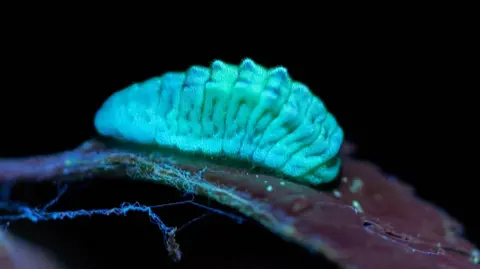
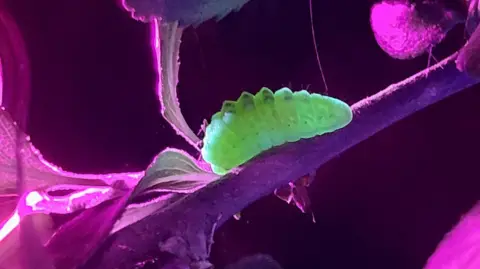
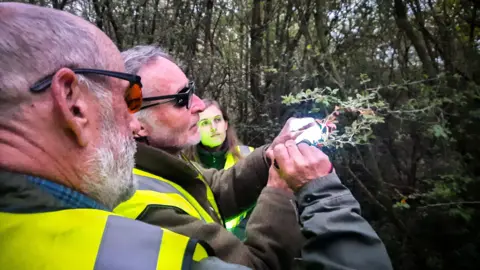
Two wildlife charities are recruiting volunteers to help spot glow-in-the-dark caterpillars at night using ultraviolet lights.
It is hoped the technique will make surveying butterflies and moths quicker and reveal secrets about their behaviour and evolution.
The surveys are part of a conservation project covering Bernwood Forest, the River Ray and Otmoor Basin near Oxford.
A conservation manager for the Dorset-based Butterfly Conservation, Steven Lofting, said the new method “has the potential to change our understanding of their biology, distribution, abundance and ecology. It’s really exciting.”
 Geoff Sutton
Training in the technique is part of a project led by the Berkshire, Buckinghamshire & Oxfordshire Wildlife Trust (BBOWT), which has been given £512,182 from The National Lottery Heritage Fund.
The first group of volunteers were trained at the Trust’s Finemere Wood nature reserve between Bicester and Aylesbury.
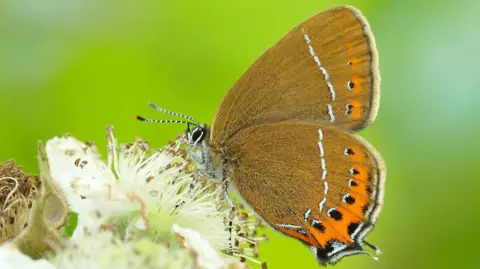
They were looking for caterpillars of the UK’s five species of hairstreak butterfly.
The black hairstreak is endangered, the brown hairstreak and white-letter hairstreak are both vulnerable, and green hairstreak and purple hairstreak have also declined in abundance and distribution since the 1970s.
 Pete Hughes
BBOWT will now apply for a total of £3.6m for the Reconnecting Bernwood, Otmoor and the Ray project, of which Butterfly Conservation is a key partner.
The scheme involves working with communities, farmers and landowners to restore habitats for threatened species on the Oxfordshire-Buckinghamshire border.
Emily Coulam, from the trust, said the data gathered by the volunteers would help them “develop projects which hope to increase abundance and range of the hairstreak butterflies through habitat creation and restoration”.
 Iain H Leach
Butterfly Conservation and BBOWT have surveyed hairstreaks for decades, but the techniques have been slow and painstaking.
For the brown hairstreak, both charities rely on volunteers going out in the middle of winter to look for tiny, pinhead-sized eggs on twigs using magnifying glasses.
Mr Lofting said: “If we can just shine a light in the bushes and these caterpillars suddenly glow at us like an electric lightbulb, it could make it so much easier and quicker to do surveys of these species.”
 Max Anderson
Surveys of butterflies are important for conservation because they are known as indicator species, meaning rises and falls in their populations can predict the health of the wider ecosystem.
Official figures from the UK Butterfly Monitoring Scheme revealed 2024 was the fifth worst year for UK butterflies since the scheme began in 1976.
More than half of the UK’s butterfly species have populations in long-term decline, a survey has found.
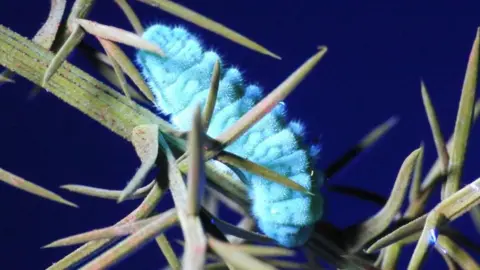 Gareth Tilley
Source link

Khamrah by Lattafa for Men - 3.4 oz EDP Spray
4% Off
Ghost Sweetheart Eau de Toilette | Pineapple, Jasmine and Sandalwood | Perfume for Women 50 ml
50% Off
Marc Jacobs Dot Eau De Parfum for Women, 100 ml
42% Off
Ted Baker W Eau de Toilette for Her, Fig Leaf, White Peony and Violet Top Notes, Pink Orchid and Raspberry Middle Notes, 75ml
£11.77 (£15.69 / 100 ml) (as of 17/07/2026 03:58 GMT +01:00 - More infoProduct prices and availability are accurate as of the date/time indicated and are subject to change. Any price and availability information displayed on [relevant Amazon Site(s), as applicable] at the time of purchase will apply to the purchase of this product.)
Ted Baker Woman Pink Eau de Toilette Spray Floral Green Feminine Fragrance, Opening Notes are Fresh Peach, Bergamot and Tangerine with Warm Musk, Vanilla and Vetiver Base, 100ml
11% Off
Vera Wang Princess Eau de Toilette - 30 ml

Choco Musk 50ml Eau De Parfum for men and women | Chocolate Musk by Jannat Aromas
17% Off
Christina Aguilera Signature Eau de Parfum (50ml) Floral, Fruity & Exotic Scent, Luxury Fragrance for Women
9% Off
Calvin Klein - Eau De Toilette CKIN2U - Calvin Klein Women, Ladies Perfume, Women's Perfume, Calvin Klein Perfume, Calvin Klein One - 150 ml
5% Off
Jimmy Choo Flash Eau de Parfum, 60 ml (Pack of 1)
3% Off
Fruit of the Loom Men's Heavy T Shirt, White, XL UK
28% Off
ATNKE LED Lighted Beanie Cap,USB Rechargeable Running Hat Ultra Bright 4 LED Waterproof Light Winter Warm Gifts for Men and Women/Pink
17% Off
Men's 1/4 Zip Pullover UK Sale Clearance, Fleece Sweatshirt Casual Jumper Long Sleeve T-shirt Top Stand Collar Sweater Plain Pullover Sports Leisure Workwear Quarter Zip Sweater Lightweight Jumpers

Crevice Cleaning Brush, Bathroom Tile Groove Gap Cleaning Brush,Premium Crevice Cleaning Tool Aluminum Support with 15° Angle Magic Brush, Thin Brush for Home Kitchen
19% Off
Wireless Earbuds, Bluetooth 5.3 Headphones in Ear with HiFi Stereo Deep Bass, 4 ENC Noise Cancelling Mic Wireless Earphones 40H Playtime, Bluetooth Earbuds Dual LED Display, IP7 Waterproof, USB-C
42% Off