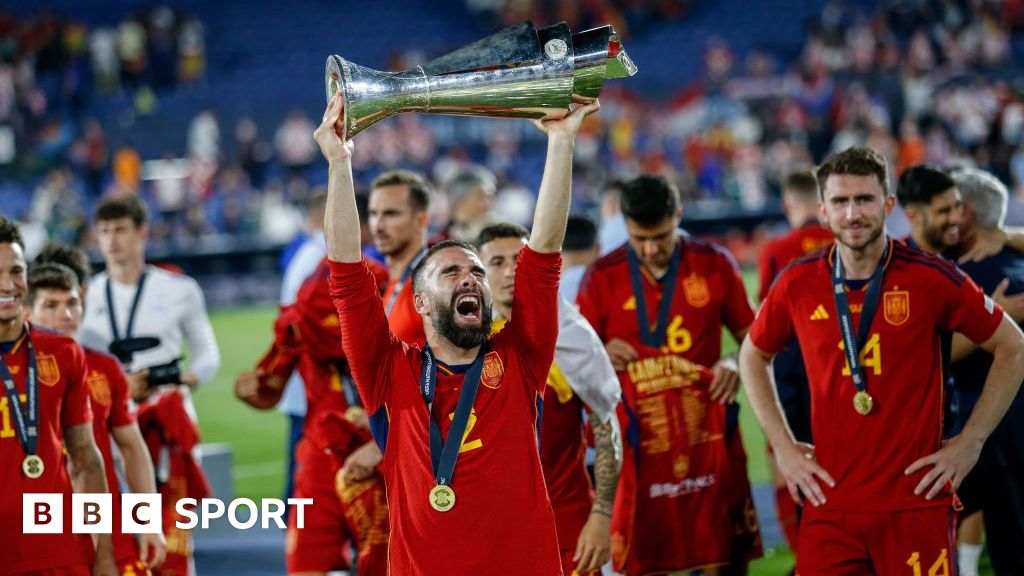
The introduction of the Nations League – in which teams of a similar ranking play a group stage against each other, before the four winners of the top-level groups advance to a mini finals competition – in 2018 has not led to an increase in the number of international fixtures or breaks.
Instead, Nations League fixtures have replaced some of the friendlies, meaning the number of international matches on the annual calendar remains the same.
The international football calendar is set by world governing body Fifa and agreed by the six continental football associations – the AFC (Asia), Caf (Africa), Concacaf (North and Central America), Conmebol (South America), the OFC (Oceania), and Uefa (Europe) – as well as the European Club Association and players’ union Fifpro.
Clubs are required to release their players to international teams when they are called into a squad. A player is entitled to take up to four days away from club duty per international fixture, rising to five days for matches played on a different continent, meaning players tend to train with their international team-mates for about 10 days during breaks.
The frequency of international breaks – particularly the three which take place in consecutive months in autumn – often draws ire from fans of clubs competing in the world’s major domestic leagues.
But the national football associations of countries lower down the Fifa rankings often rely heavily on revenue from broadcast rights for fixtures played against other nations. That money plays a key role in maintaining and developing football infrastructure in those nations.
In recent years, greater attention has been focused on the wellbeing and workload of football’s elite players, who in many cases are playing more matches than ever.
But while top-level club competitions such as the Uefa Champions League and Fifa Club World Cup have undergone significant expansions, international fixtures numbers have remained largely the same.
Source link

Khamrah by Lattafa for Men - 3.4 oz EDP Spray
4% Off
Ghost Sweetheart Eau de Toilette | Pineapple, Jasmine and Sandalwood | Perfume for Women 50 ml
50% Off
Marc Jacobs Dot Eau De Parfum for Women, 100 ml
42% Off
Ted Baker W Eau de Toilette for Her, Fig Leaf, White Peony and Violet Top Notes, Pink Orchid and Raspberry Middle Notes, 75ml
£11.77 (£15.69 / 100 ml) (as of 16/07/2026 03:58 GMT +01:00 - More infoProduct prices and availability are accurate as of the date/time indicated and are subject to change. Any price and availability information displayed on [relevant Amazon Site(s), as applicable] at the time of purchase will apply to the purchase of this product.)
Ted Baker Woman Pink Eau de Toilette Spray Floral Green Feminine Fragrance, Opening Notes are Fresh Peach, Bergamot and Tangerine with Warm Musk, Vanilla and Vetiver Base, 100ml
11% Off
Vera Wang Princess Eau de Toilette - 30 ml

Choco Musk 50ml Eau De Parfum for men and women | Chocolate Musk by Jannat Aromas
17% Off
Christina Aguilera Signature Eau de Parfum (50ml) Floral, Fruity & Exotic Scent, Luxury Fragrance for Women
9% Off
Calvin Klein - Eau De Toilette CKIN2U - Calvin Klein Women, Ladies Perfume, Women's Perfume, Calvin Klein Perfume, Calvin Klein One - 150 ml
5% Off
Jimmy Choo Flash Eau de Parfum, 60 ml (Pack of 1)
3% Off
Fruit of the Loom Men's Heavy T Shirt, White, XL UK
28% Off
ATNKE LED Lighted Beanie Cap,USB Rechargeable Running Hat Ultra Bright 4 LED Waterproof Light Winter Warm Gifts for Men and Women/Pink
17% Off
Men's 1/4 Zip Pullover UK Sale Clearance, Fleece Sweatshirt Casual Jumper Long Sleeve T-shirt Top Stand Collar Sweater Plain Pullover Sports Leisure Workwear Quarter Zip Sweater Lightweight Jumpers

Crevice Cleaning Brush, Bathroom Tile Groove Gap Cleaning Brush,Premium Crevice Cleaning Tool Aluminum Support with 15° Angle Magic Brush, Thin Brush for Home Kitchen
19% Off
Wireless Earbuds, Bluetooth 5.3 Headphones in Ear with HiFi Stereo Deep Bass, 4 ENC Noise Cancelling Mic Wireless Earphones 40H Playtime, Bluetooth Earbuds Dual LED Display, IP7 Waterproof, USB-C
42% Off