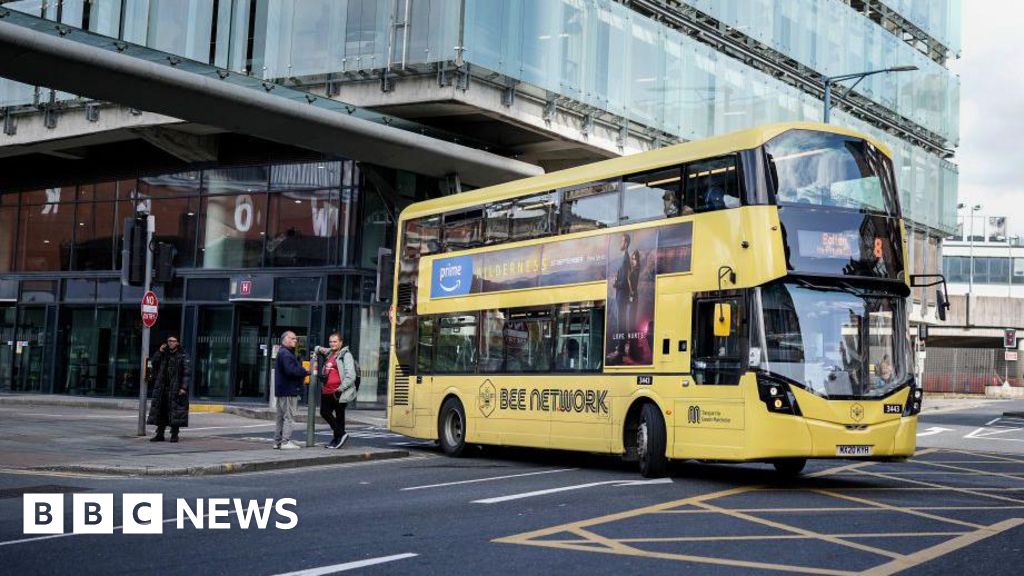

There are only a few areas in England where the local bus company is owned by the council.
The model – known as bus franchising – sees local authorities grant private companies the right to operate in a specific area, although the council maintains control over things like routes, timetables and fares.
Supporters say it means profits can be reinvested into services. For example, if the council puts money into things like bus lanes it sees a direct return – better services, more passengers and higher revenue from fares which can then be reinvested.
In the run-up to the general election, Labour pledged, external that it would hand all local transport authorities the power to run their own bus services and lift restrictions on new, publicly-owned bus operators.
But Shadow Transport Secretary Helen Whately suggested in a statement that “Labour’s plans are unfunded” and the government needed to explain whether local authorities would be expected to raise tax or cut services to fund the proposal.
“Moreover, it won’t make a blind bit of difference for passengers.”
“It won’t increase the number of services and they would much prefer to have the £2 fare cap extended at the Budget,” she added, referring to a policy introduced by the Conservative government, external to cap single bus fares on participating bus routes at £2, which has been extended until December.
Buses are the most commonly used form of public transport, external in Great Britain.
But services have been in long-term decline, with the pandemic hitting passenger numbers and profits hard.
According to the Department for Transport, external, the number of local bus passenger journeys in England rose by 19.4% to 3.4 billion in the year ending March 2023.
This is much lower than usage levels before the pandemic, when journeys totalled 4.1 billion in the 12 months ending March 2020.
Until the 1980s, most bus services were delivered through publicly owned companies, often run by councils, but in 1986 services outside London were deregulated and privatised, leading to the mass sale of council bus companies.
In London a franchising system was introduced, with Transport for London deciding routes, timetables and fares and operators bidding to run services for a fixed fee.
This has contributed to the capital seeing an increase in bus use, with services less hit by cuts, in contrast to other parts of the country.
Source link

Khamrah by Lattafa for Men - 3.4 oz EDP Spray
4% Off
Ghost Sweetheart Eau de Toilette | Pineapple, Jasmine and Sandalwood | Perfume for Women 50 ml
50% Off
Marc Jacobs Dot Eau De Parfum for Women, 100 ml
42% Off
Ted Baker W Eau de Toilette for Her, Fig Leaf, White Peony and Violet Top Notes, Pink Orchid and Raspberry Middle Notes, 75ml
£11.77 (£15.69 / 100 ml) (as of 21/09/2026 05:05 GMT +01:00 - More infoProduct prices and availability are accurate as of the date/time indicated and are subject to change. Any price and availability information displayed on [relevant Amazon Site(s), as applicable] at the time of purchase will apply to the purchase of this product.)
Ted Baker Woman Pink Eau de Toilette Spray Floral Green Feminine Fragrance, Opening Notes are Fresh Peach, Bergamot and Tangerine with Warm Musk, Vanilla and Vetiver Base, 100ml
11% Off
Vera Wang Princess Eau de Toilette - 30 ml

Choco Musk 50ml Eau De Parfum for men and women | Chocolate Musk by Jannat Aromas
17% Off
Christina Aguilera Signature Eau de Parfum (50ml) Floral, Fruity & Exotic Scent, Luxury Fragrance for Women
9% Off
Calvin Klein - Eau De Toilette CKIN2U - Calvin Klein Women, Ladies Perfume, Women's Perfume, Calvin Klein Perfume, Calvin Klein One - 150 ml
5% Off
Jimmy Choo Flash Eau de Parfum, 60 ml (Pack of 1)
3% Off
Fruit of the Loom Men's Heavy T Shirt, White, XL UK
28% Off
ATNKE LED Lighted Beanie Cap,USB Rechargeable Running Hat Ultra Bright 4 LED Waterproof Light Winter Warm Gifts for Men and Women/Pink
17% Off
Men's 1/4 Zip Pullover UK Sale Clearance, Fleece Sweatshirt Casual Jumper Long Sleeve T-shirt Top Stand Collar Sweater Plain Pullover Sports Leisure Workwear Quarter Zip Sweater Lightweight Jumpers

Crevice Cleaning Brush, Bathroom Tile Groove Gap Cleaning Brush,Premium Crevice Cleaning Tool Aluminum Support with 15° Angle Magic Brush, Thin Brush for Home Kitchen
19% Off
Wireless Earbuds, Bluetooth 5.3 Headphones in Ear with HiFi Stereo Deep Bass, 4 ENC Noise Cancelling Mic Wireless Earphones 40H Playtime, Bluetooth Earbuds Dual LED Display, IP7 Waterproof, USB-C
42% Off