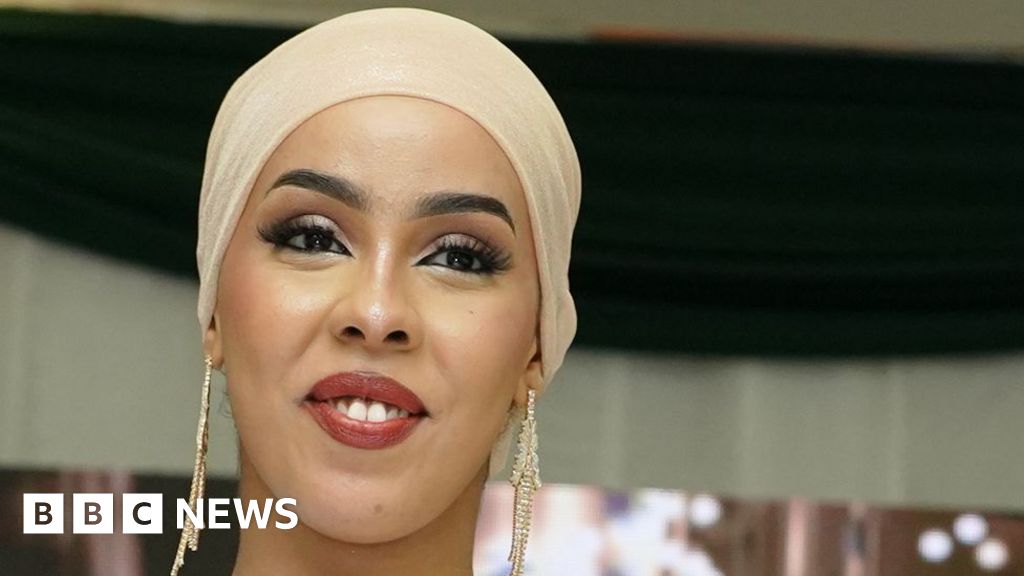
The night-time pageant in a luxury seafront hotel was a far cry from the lives of most people in Somalia, especially women.
Four million Somalis, about a quarter of the population, are living elsewhere in the country after being forced from their homes.
The UN estimates between 70% and 80% of them are women.
In 2024, enough data was collected for Somalia to be included in the United Nations Human Development Index for the first time in three decades. It came last.
Somalia is fourth from bottom on the UN’s Gender Inequality Index. Aid groups say 52% of women in the country have experienced gender-based violence. About 98% undergo female genital mutilation.
Traditionally, when a man raped a woman, his “punishment” was that he had to marry the woman who he had sexually assaulted. Attitudes towards rape and other forms of abuse against women have not changed much over the years.
In 2013, a woman in Mogadishu was sentenced to jail for one year after reporting that she had been raped by members of the security forces.
In the self-declared republic of Somaliland, religious leaders quashed a 2018 sexual offences law almost as soon as it was signed. The revised version does not protect women from child marriage, forced marriage, rape or other forms of sexual abuse.
But the fact that a Miss Somalia competition can be held in Mogadishu, even a kilometre away from a suicide bombing, shows that the country is changing both in terms of attitudes and in terms of security.
A beauty pageant would have been unthinkable a few years ago, especially when al-Shabab controlled the capital.
The crowd at Elite Hotel did not leave until the early hours of the morning. They did not hear the sound of the nearby attack as it was drowned out by the noise of the Indian Ocean waves breaking on the beach.
Kiin Hassan Fakat is a reporter with Bilan Media, an all-female news outfit in Somalia.
Mary Harper has written two books about Somalia, including Everything You Have Told Me Is True, a look at life under al-Shabab.
Source link

Khamrah by Lattafa for Men - 3.4 oz EDP Spray
4% Off
Ghost Sweetheart Eau de Toilette | Pineapple, Jasmine and Sandalwood | Perfume for Women 50 ml
50% Off
Marc Jacobs Dot Eau De Parfum for Women, 100 ml
42% Off
Ted Baker W Eau de Toilette for Her, Fig Leaf, White Peony and Violet Top Notes, Pink Orchid and Raspberry Middle Notes, 75ml
£11.77 (£15.69 / 100 ml) (as of 01/05/2026 03:09 GMT +01:00 - More infoProduct prices and availability are accurate as of the date/time indicated and are subject to change. Any price and availability information displayed on [relevant Amazon Site(s), as applicable] at the time of purchase will apply to the purchase of this product.)
Ted Baker Woman Pink Eau de Toilette Spray Floral Green Feminine Fragrance, Opening Notes are Fresh Peach, Bergamot and Tangerine with Warm Musk, Vanilla and Vetiver Base, 100ml
11% Off
Vera Wang Princess Eau de Toilette - 30 ml

Choco Musk 50ml Eau De Parfum for men and women | Chocolate Musk by Jannat Aromas
17% Off
Christina Aguilera Signature Eau de Parfum (50ml) Floral, Fruity & Exotic Scent, Luxury Fragrance for Women
9% Off
Calvin Klein - Eau De Toilette CKIN2U - Calvin Klein Women, Ladies Perfume, Women's Perfume, Calvin Klein Perfume, Calvin Klein One - 150 ml
5% Off
Jimmy Choo Flash Eau de Parfum, 60 ml (Pack of 1)
3% Off
Fruit of the Loom Men's Heavy T Shirt, White, XL UK
28% Off
ATNKE LED Lighted Beanie Cap,USB Rechargeable Running Hat Ultra Bright 4 LED Waterproof Light Winter Warm Gifts for Men and Women/Pink
17% Off
Men's 1/4 Zip Pullover UK Sale Clearance, Fleece Sweatshirt Casual Jumper Long Sleeve T-shirt Top Stand Collar Sweater Plain Pullover Sports Leisure Workwear Quarter Zip Sweater Lightweight Jumpers

Crevice Cleaning Brush, Bathroom Tile Groove Gap Cleaning Brush,Premium Crevice Cleaning Tool Aluminum Support with 15° Angle Magic Brush, Thin Brush for Home Kitchen
19% Off
Wireless Earbuds, Bluetooth 5.3 Headphones in Ear with HiFi Stereo Deep Bass, 4 ENC Noise Cancelling Mic Wireless Earphones 40H Playtime, Bluetooth Earbuds Dual LED Display, IP7 Waterproof, USB-C
42% Off