

Traditional chemotherapy often poses significant challenges, including severe side effects, damage to healthy tissue and limited efficacy.
Now, researchers at the Yong Loo Lin School of Medicine, National University of Singapore (NUS Medicine) have developed a revolutionary approach to cancer treatment—one that is a more targeted, effective, and less toxic alternative to traditional chemotherapy. This new approach not only improves treatment effectiveness but also significantly reduces the required drug dosage for cancer treatment.
Led by Associate Professor Matthew Chang, researchers at the NUS Synthetic Biology for Clinical and Technological Innovation (SynCTI) and the Synthetic Biology Translational Program (Syn Bio TRP) at NUS Medicine identified a new method of drug delivery that offers hope for the development of a new clinical treatment for cancer patients. The findings, published in Nature Communications, showcase a novel method for delivering chemotherapy drugs directly to tumor sites by utilizing the natural interactions between bacteria and cancer cells.
Prodrugs are inactive molecules that transform into active drugs within the body, particularly in tumor environments, by leveraging unique tumor conditions, such as low oxygen or high acidity, to activate the drug precisely at the cancer site, minimizing damage to healthy tissues. However, current prodrug strategies exhibit limited target specificity and frequently depend on macromolecular carriers, which complicates both drug distribution and clearance.
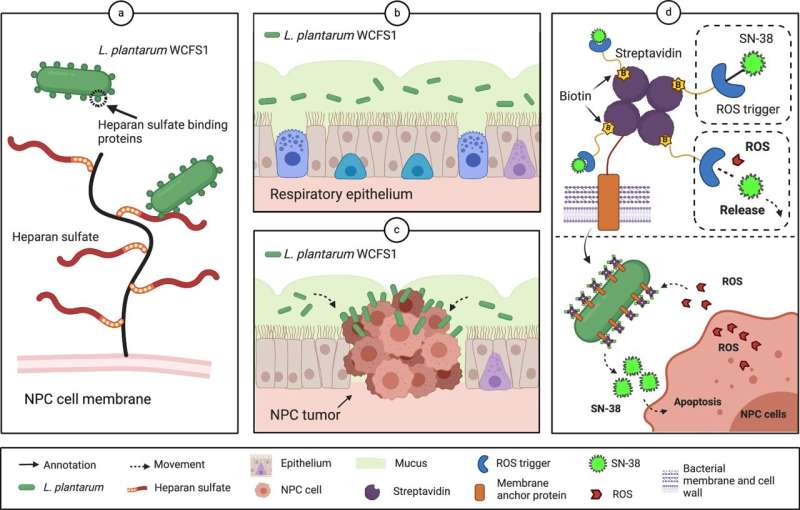
To overcome these limitations, NUS Medicine researchers developed a prodrug delivery method that utilizes a commensal Lactobacillus strain that binds specifically to cancer cells via a surface molecule called heparan sulfate. These engineered bacteria carry a prodrug that converts to the chemotherapy drug SN-38 at the tumor site.
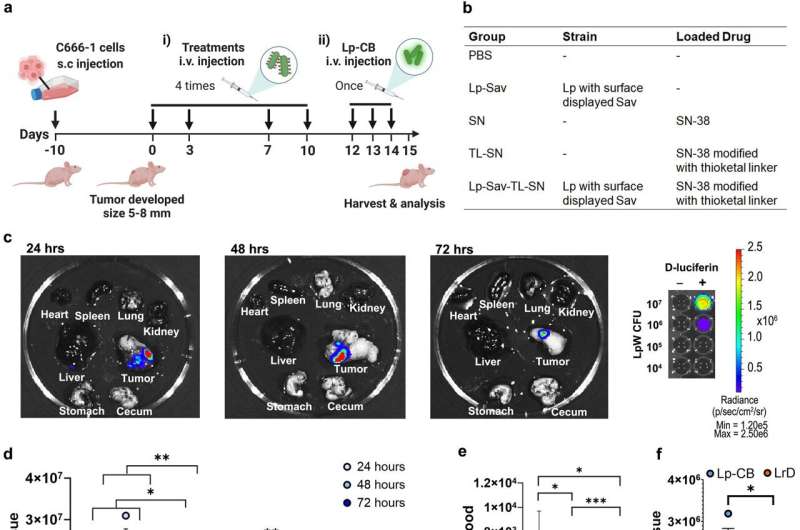
In preclinical models of nasopharyngeal cancer, the engineered bacteria localized specifically in the tumor and released the chemotherapy drug directly at the cancer site, reducing tumor growth by 67% and increasing the effectiveness of the chemotherapy drug by 54%.
One of the most promising aspects of this research is the potential broader applications across various types of cancer therapy, as the Lactobacillus strain identified by the researchers binds specifically to cancer cells.
Lead Researcher Dr. Shen Haosheng, Research Fellow at SynCTI said, “By harnessing the affinity between bacteria and cancer cells, we aim to revolutionize chemotherapy delivery. We are evaluating the binding affinity of several microbial strains to multiple cancer cell lines with the aim of developing a versatile delivery system using microbial strains to target chemotherapy drugs to various mucosal cancers, such as colorectal, bladder, stomach, oral, lung, and nasal cancer.”
“Cancer treatment often takes a tremendously heavy toll on patients. Our research represents a significant step toward developing a more targeted and less toxic approach to fighting cancer. We hope this can pave the way for therapies that are both mild and effective,” added A/Prof Chang, Dean’s Chair in Medicine and Director of SynCTI and NUS Medicine Syn Bio TRP.
More information:
Haosheng Shen et al, Prodrug-conjugated tumor-seeking commensals for targeted cancer therapy, Nature Communications (2024). DOI: 10.1038/s41467-024-48661-y
Citation:
Engineered bacteria deliver chemotherapy directly to tumors (2024, June 6)
retrieved 6 June 2024
from https://medicalxpress.com/news/2024-06-bacteria-chemotherapy-tumors.html
This document is subject to copyright. Apart from any fair dealing for the purpose of private study or research, no
part may be reproduced without the written permission. The content is provided for information purposes only.

Khamrah by Lattafa for Men - 3.4 oz EDP Spray
4% Off
Ghost Sweetheart Eau de Toilette | Pineapple, Jasmine and Sandalwood | Perfume for Women 50 ml
50% Off
Marc Jacobs Dot Eau De Parfum for Women, 100 ml
42% Off
Ted Baker W Eau de Toilette for Her, Fig Leaf, White Peony and Violet Top Notes, Pink Orchid and Raspberry Middle Notes, 75ml
£11.77 (£15.69 / 100 ml) (as of 04/10/2026 05:09 GMT +01:00 - More infoProduct prices and availability are accurate as of the date/time indicated and are subject to change. Any price and availability information displayed on [relevant Amazon Site(s), as applicable] at the time of purchase will apply to the purchase of this product.)
Ted Baker Woman Pink Eau de Toilette Spray Floral Green Feminine Fragrance, Opening Notes are Fresh Peach, Bergamot and Tangerine with Warm Musk, Vanilla and Vetiver Base, 100ml
11% Off
Vera Wang Princess Eau de Toilette - 30 ml

Choco Musk 50ml Eau De Parfum for men and women | Chocolate Musk by Jannat Aromas
17% Off
Christina Aguilera Signature Eau de Parfum (50ml) Floral, Fruity & Exotic Scent, Luxury Fragrance for Women
9% Off
Calvin Klein - Eau De Toilette CKIN2U - Calvin Klein Women, Ladies Perfume, Women's Perfume, Calvin Klein Perfume, Calvin Klein One - 150 ml
5% Off
Jimmy Choo Flash Eau de Parfum, 60 ml (Pack of 1)
3% Off
Fruit of the Loom Men's Heavy T Shirt, White, XL UK
28% Off
ATNKE LED Lighted Beanie Cap,USB Rechargeable Running Hat Ultra Bright 4 LED Waterproof Light Winter Warm Gifts for Men and Women/Pink
17% Off
Men's 1/4 Zip Pullover UK Sale Clearance, Fleece Sweatshirt Casual Jumper Long Sleeve T-shirt Top Stand Collar Sweater Plain Pullover Sports Leisure Workwear Quarter Zip Sweater Lightweight Jumpers
£5.88 (as of 12/11/2025 00:52 GMT +01:00 - More infoProduct prices and availability are accurate as of the date/time indicated and are subject to change. Any price and availability information displayed on [relevant Amazon Site(s), as applicable] at the time of purchase will apply to the purchase of this product.)
Crevice Cleaning Brush, Bathroom Tile Groove Gap Cleaning Brush,Premium Crevice Cleaning Tool Aluminum Support with 15° Angle Magic Brush, Thin Brush for Home Kitchen
19% Off
Wireless Earbuds, Bluetooth 5.3 Headphones in Ear with HiFi Stereo Deep Bass, 4 ENC Noise Cancelling Mic Wireless Earphones 40H Playtime, Bluetooth Earbuds Dual LED Display, IP7 Waterproof, USB-C
42% Off