
 [


Optical coherence tomography was noninferior to intravascular ultrasound to guide stenting in patients with left main coronary artery disease, according to results presented in a Hot Line session today at ESC Congress 2026.
Percutaneous coronary intervention (PCI) with stent implantation is used to treat narrowed coronary arteries. The left main coronary artery supplies most of the blood to the left ventricle. Performing PCI in this main artery can be technically demanding where it divides into two branches (distal left main bifurcation).
Intravascular imaging helps operators assess the lesion, select devices and optimize stent implantation. Intravascular ultrasound (IVUS) is a widely used technique that provides good tissue penetration and a large field of view, whereas optical coherence tomography (OCT) provides higher-resolution assessment of the vessel lumen and stent.
“Although OCT-guided PCI has been shown to be noninferior to IVUS-guided PCI in a broad PCI population, direct randomized evidence in true distal left main bifurcation lesions has been lacking,” explained principal investigator of the ISOLEDS trial, Professor Yong Zeng from Beijing Anzhen Hospital, Capital Medical University, Beijing, China. He continued, “We conducted a dedicated randomized trial to determine whether OCT guidance is noninferior to IVUS guidance in this setting.”
The open-label ISOLEDS noninferiority trial enrolled 664 patients with true distal left main bifurcation lesions at 24 centers in China and randomized them (1:1) to OCT- or IVUS-guided PCI. The 12-month primary endpoint was target lesion failure, comprising cardiac death, target lesion-related myocardial infarction or clinically driven target lesion revascularization. The mean age of the study population was 63.5 years, and 22.1% were women.
At a median follow-up of 362 days, target lesion failure with OCT-guided PCI was noninferior to IVUS-guided PCI (12-month Kaplan–Meier estimates: 14.4% vs. 19.6%; adjusted hazard ratio 0.90; 95% confidence interval 0.59 to 1.36; p for noninferiority = 0.0003).
The finding remained consistent when periprocedural myocardial infarction was excluded and was supported by the per-protocol and competing-risk analyses.
Discussing the implications of the findings, Zeng said, “ISOLEDS shows that OCT guidance may be considered an alternative to IVUS guidance for appropriately selected patients undergoing PCI for true distal left main bifurcation lesions. The findings do not establish equivalence or superiority. In practice, selection of the imaging modality should account for coronary anatomy, image-acquisition feasibility and local expertise.”
Key medical concepts
Clinical categories


Citation:
Two imaging techniques equally as effective to guide complex stenting (2026, September 5)
retrieved 5 September 2026
from https://medicalxpress.com/news/2026-08-imaging-techniques-equally-effective-complex.html
This document is subject to copyright. Apart from any fair dealing for the purpose of private study or research, no
part may be reproduced without the written permission. The content is provided for information purposes only.

Khamrah by Lattafa for Men - 3.4 oz EDP Spray
4% Off
Ghost Sweetheart Eau de Toilette | Pineapple, Jasmine and Sandalwood | Perfume for Women 50 ml
50% Off
Marc Jacobs Dot Eau De Parfum for Women, 100 ml
42% Off
Ted Baker W Eau de Toilette for Her, Fig Leaf, White Peony and Violet Top Notes, Pink Orchid and Raspberry Middle Notes, 75ml
£11.77 (£15.69 / 100 ml) (as of 11/10/2026 06:34 GMT +01:00 - More infoProduct prices and availability are accurate as of the date/time indicated and are subject to change. Any price and availability information displayed on [relevant Amazon Site(s), as applicable] at the time of purchase will apply to the purchase of this product.)
Ted Baker Woman Pink Eau de Toilette Spray Floral Green Feminine Fragrance, Opening Notes are Fresh Peach, Bergamot and Tangerine with Warm Musk, Vanilla and Vetiver Base, 100ml
11% Off
Vera Wang Princess Eau de Toilette - 30 ml
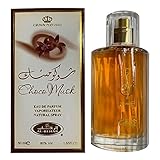
Choco Musk 50ml Eau De Parfum for men and women | Chocolate Musk by Jannat Aromas
17% Off
Christina Aguilera Signature Eau de Parfum (50ml) Floral, Fruity & Exotic Scent, Luxury Fragrance for Women
9% Off
Calvin Klein - Eau De Toilette CKIN2U - Calvin Klein Women, Ladies Perfume, Women's Perfume, Calvin Klein Perfume, Calvin Klein One - 150 ml
5% Off
Jimmy Choo Flash Eau de Parfum, 60 ml (Pack of 1)
3% Off
Fruit of the Loom Men's Heavy T Shirt, White, XL UK
28% Off
ATNKE LED Lighted Beanie Cap,USB Rechargeable Running Hat Ultra Bright 4 LED Waterproof Light Winter Warm Gifts for Men and Women/Pink
17% Off
Men's 1/4 Zip Pullover UK Sale Clearance, Fleece Sweatshirt Casual Jumper Long Sleeve T-shirt Top Stand Collar Sweater Plain Pullover Sports Leisure Workwear Quarter Zip Sweater Lightweight Jumpers
£5.88 (as of 12/11/2025 00:52 GMT +01:00 - More infoProduct prices and availability are accurate as of the date/time indicated and are subject to change. Any price and availability information displayed on [relevant Amazon Site(s), as applicable] at the time of purchase will apply to the purchase of this product.)
Crevice Cleaning Brush, Bathroom Tile Groove Gap Cleaning Brush,Premium Crevice Cleaning Tool Aluminum Support with 15° Angle Magic Brush, Thin Brush for Home Kitchen
19% Off
Wireless Earbuds, Bluetooth 5.3 Headphones in Ear with HiFi Stereo Deep Bass, 4 ENC Noise Cancelling Mic Wireless Earphones 40H Playtime, Bluetooth Earbuds Dual LED Display, IP7 Waterproof, USB-C
42% Off