
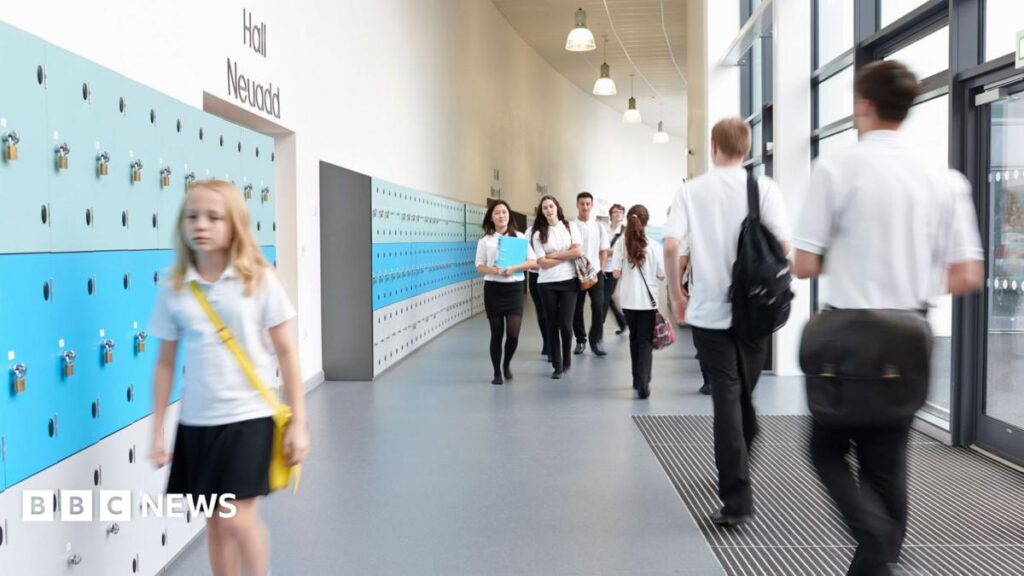

A report for Swansea council said the demographic trend presented significant challenges for education planning, funding, and the long-term sustainability of some schools, according to the Local Democracy Reporting Service.
Primary and secondary schools with fewer than 90 and 600 pupils respectively are defined by the council as “very small” and faced particular pressures, said the report, when they operated at below those thresholds due to limited economies-of-scale and reduced pupil-led funding.
Also, if a primary school fell below 90 pupils it would no longer be funded for a deputy head teacher.
The report said several primaries operated at or close to the 90-pupil threshold in Swansea while one secondary was close to the 600-pupil threshold.
Mike Day said during a previous period of school reorganisation in Swansea it would have been cheaper to send pupils from a particular small school to Eton.
A council education manager, when asked if any primaries currently had fewer than 90 pupils, said Knelston Primary School, Gower, had come close but had regained some ground.
“That’s probably the closest we have seen going below 90,” she said.
The projected 5,350-pupil decline consists of an estimated 3,968 drop at primary level and 1,382 drop at secondary, with a lower proportion of reductions at Welsh-language schools.
Low birth rates have caused pupil numbers to plunge in Blaenau Gwent too, where councillors voted to close Roseheyworth Primary School campus over the summer, part of the Abertillery Learning Community, citing budget pressures and shrinking school rolls.
Pembrokeshire council also said last year it had an ageing population, with pupil numbers falling by more than 2,000 since 1996, including a “significant decline” in pupil numbers in the Preseli and Tenby areas.
The report for Swansea said ways of coping with the decline could include more community use of school buildings, smaller class sizes, and ensuring investment “is targeted towards sustainable provision”.
Day said engagement with all relevant groups was critical if further reorganisation was to take place.
He recalled a consultation with parents who overwhelmingly backed the idea of removing surplus places “but you can imagine what happened then when a proposal was put forward to close a particular school”.
Lyndon Jones, who heads the education scrutiny panel, requested a breakdown of the estimated pupil decline on a school-by-school basis.
Smith said schools viewed as small in Swansea might be seen as medium-sized in rural council areas.
He recalled visiting a rural school once with five or six pupils and seeing them all sitting at the same table for lunch.
“The older children were teaching the younger ones how to use a knife and fork,” he said.
“Take away the sentiment of that, there were all sorts of issues about not just the cost which was immense but also what kind of experience were you able to offer children in a school that small. We are not facing that issue in Swansea.”
BBC News

Khamrah by Lattafa for Men - 3.4 oz EDP Spray
4% Off
Ghost Sweetheart Eau de Toilette | Pineapple, Jasmine and Sandalwood | Perfume for Women 50 ml
50% Off
Marc Jacobs Dot Eau De Parfum for Women, 100 ml
42% Off
Ted Baker W Eau de Toilette for Her, Fig Leaf, White Peony and Violet Top Notes, Pink Orchid and Raspberry Middle Notes, 75ml
£11.77 (£15.69 / 100 ml) (as of 15/10/2026 06:35 GMT +01:00 - More infoProduct prices and availability are accurate as of the date/time indicated and are subject to change. Any price and availability information displayed on [relevant Amazon Site(s), as applicable] at the time of purchase will apply to the purchase of this product.)
Ted Baker Woman Pink Eau de Toilette Spray Floral Green Feminine Fragrance, Opening Notes are Fresh Peach, Bergamot and Tangerine with Warm Musk, Vanilla and Vetiver Base, 100ml
11% Off
Vera Wang Princess Eau de Toilette - 30 ml
Choco Musk 50ml Eau De Parfum for men and women | Chocolate Musk by Jannat Aromas
17% Off
Christina Aguilera Signature Eau de Parfum (50ml) Floral, Fruity & Exotic Scent, Luxury Fragrance for Women
9% Off
Calvin Klein - Eau De Toilette CKIN2U - Calvin Klein Women, Ladies Perfume, Women's Perfume, Calvin Klein Perfume, Calvin Klein One - 150 ml
5% Off
Jimmy Choo Flash Eau de Parfum, 60 ml (Pack of 1)
3% Off
Fruit of the Loom Men's Heavy T Shirt, White, XL UK
28% Off
ATNKE LED Lighted Beanie Cap,USB Rechargeable Running Hat Ultra Bright 4 LED Waterproof Light Winter Warm Gifts for Men and Women/Pink
17% Off
Men's 1/4 Zip Pullover UK Sale Clearance, Fleece Sweatshirt Casual Jumper Long Sleeve T-shirt Top Stand Collar Sweater Plain Pullover Sports Leisure Workwear Quarter Zip Sweater Lightweight Jumpers
£5.88 (as of 12/11/2025 00:52 GMT +01:00 - More infoProduct prices and availability are accurate as of the date/time indicated and are subject to change. Any price and availability information displayed on [relevant Amazon Site(s), as applicable] at the time of purchase will apply to the purchase of this product.)
Crevice Cleaning Brush, Bathroom Tile Groove Gap Cleaning Brush,Premium Crevice Cleaning Tool Aluminum Support with 15° Angle Magic Brush, Thin Brush for Home Kitchen
19% Off
Wireless Earbuds, Bluetooth 5.3 Headphones in Ear with HiFi Stereo Deep Bass, 4 ENC Noise Cancelling Mic Wireless Earphones 40H Playtime, Bluetooth Earbuds Dual LED Display, IP7 Waterproof, USB-C
42% Off