Science correspondent, BBC News
There is a magnificent, snow-white wolf on the cover of Time Magazine today – accompanied by a headline announcing the return of the dire wolf.
This now extinct species is possibly most famous for its fictional role in Game of Thrones, but it did exist – more than 10,000 years ago – when it roamed across the Americas.
The company Colossal Biosciences is behind today’s headlines. It announced that it used “deft genetic engineering and ancient DNA” to breed three dire wolf puppies and to “de-extinct” the species.
But while the young wolves – Romulus, Remus, and Khaleesi – represent an impressive technological breakthrough, independent experts say they are not actually dire wolves.
Zoologist Philip Seddon from the University of Otago in New Zealand explained the animals are “genetically modified grey wolves”.
Colossal publicised its efforts to use similar cutting edge genetic techniques to bring back extinct animals including the woolly mammoth and the Tasmanian tiger.
Meanwhile experts have pointed to important biological differences between the wolf on the cover of Time and the dire wolf that roamed and hunted during the last ice age.

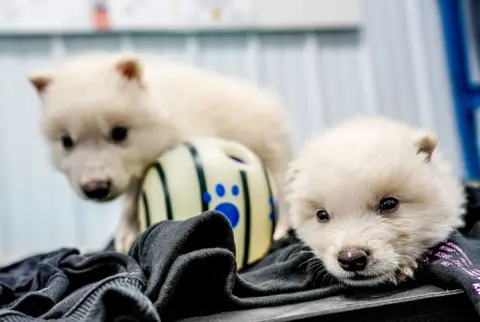 Colossal Biosciences
Paleogeneticist Dr Nic Rawlence, also from Otago University, explained how ancient dire wolf DNA – extracted from fossilised remains – is too degraded and damaged to biologically copy or clone.
“Ancient DNA is like if you put fresh DNA in a 500 degree oven overnight,” Dr Rawlence told BBC News. “It comes out fragmented – like shards and dust.
“You can reconstruct [it], but it’s not good enough to do anything else with.”
Instead, he added, the de-extinction team used new synthetic biology technology – snipping out pieces of DNA and inserting them into the genetic code of a living animal that has its entire biological blueprint in tact, in this case a grey wolf.
“So what Colossal has produced is a grey wolf, but it has some dire wolf-like characteristics, like a larger skull and white fur,” said Dr Rawlence. “It’s a hybrid.”
Dr Beth Shapiro, a biologist from Colossal Biosciences, said that this feat does represent de-extinction, which she described as recreating animals with the same characteristics.
“A grey wolf is the closest living relative of a dire wolf – they’re genetically really similar – so we targeted DNA sequences that lead to dire wolf traits and then edited grey wolf cells… then we cloned those cells and created our dire wolves.”
According to Dr Rawlence though, dire wolves diverged from grey wolves anywhere between 2.5 to six million years ago.
“It’s in a completely different genus to grey wolves,” he said. “Colossal compared the genomes of the dire wolf and the grey wolf, and from about 19,000 genes, they determined that 20 changes in 14 genes gave them a dire wolf.”
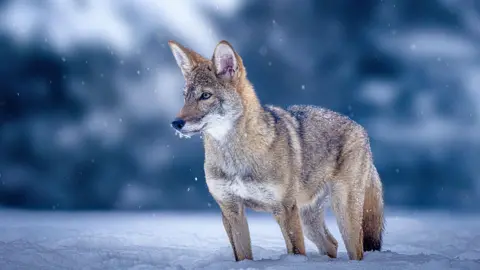 Colossal Biosciences
The edited embryos were implanted in surrogate domestic dog mothers. According to the article in Time, all three wolves were born by planned caesarean section to minimise the risk of complications.
Colossal, which was valued at $10bn (£7.8bn) in January, is keeping the wolves on a private 2,000-acre facility at an undisclosed location in the northern US.
The pups certainly look like many people’s vision of a dire wolf and the story has gathered global attention. So why is this scientific distinction important?
“Because extinction is still forever,” Dr Rawlence told BBC News. “If we don’t have extinction, how are we going to learn from our mistakes?
“Is the message now that we can go and destroy the environment and that animals can go extinct, but we can bring them back?”
BBC News

Khamrah by Lattafa for Men - 3.4 oz EDP Spray
4% Off
Ghost Sweetheart Eau de Toilette | Pineapple, Jasmine and Sandalwood | Perfume for Women 50 ml
50% Off
Marc Jacobs Dot Eau De Parfum for Women, 100 ml
42% Off
Ted Baker W Eau de Toilette for Her, Fig Leaf, White Peony and Violet Top Notes, Pink Orchid and Raspberry Middle Notes, 75ml
£11.77 (£15.69 / 100 ml) (as of 09/06/2026 03:31 GMT +01:00 - More infoProduct prices and availability are accurate as of the date/time indicated and are subject to change. Any price and availability information displayed on [relevant Amazon Site(s), as applicable] at the time of purchase will apply to the purchase of this product.)
Ted Baker Woman Pink Eau de Toilette Spray Floral Green Feminine Fragrance, Opening Notes are Fresh Peach, Bergamot and Tangerine with Warm Musk, Vanilla and Vetiver Base, 100ml
11% Off
Vera Wang Princess Eau de Toilette - 30 ml

Choco Musk 50ml Eau De Parfum for men and women | Chocolate Musk by Jannat Aromas
17% Off
Christina Aguilera Signature Eau de Parfum (50ml) Floral, Fruity & Exotic Scent, Luxury Fragrance for Women
9% Off
Calvin Klein - Eau De Toilette CKIN2U - Calvin Klein Women, Ladies Perfume, Women's Perfume, Calvin Klein Perfume, Calvin Klein One - 150 ml
5% Off
Jimmy Choo Flash Eau de Parfum, 60 ml (Pack of 1)
3% Off
Fruit of the Loom Men's Heavy T Shirt, White, XL UK
28% Off
ATNKE LED Lighted Beanie Cap,USB Rechargeable Running Hat Ultra Bright 4 LED Waterproof Light Winter Warm Gifts for Men and Women/Pink
17% Off
Men's 1/4 Zip Pullover UK Sale Clearance, Fleece Sweatshirt Casual Jumper Long Sleeve T-shirt Top Stand Collar Sweater Plain Pullover Sports Leisure Workwear Quarter Zip Sweater Lightweight Jumpers
£5.88 (as of 12/11/2025 00:52 GMT +01:00 - More infoProduct prices and availability are accurate as of the date/time indicated and are subject to change. Any price and availability information displayed on [relevant Amazon Site(s), as applicable] at the time of purchase will apply to the purchase of this product.)
Crevice Cleaning Brush, Bathroom Tile Groove Gap Cleaning Brush,Premium Crevice Cleaning Tool Aluminum Support with 15° Angle Magic Brush, Thin Brush for Home Kitchen
19% Off
Wireless Earbuds, Bluetooth 5.3 Headphones in Ear with HiFi Stereo Deep Bass, 4 ENC Noise Cancelling Mic Wireless Earphones 40H Playtime, Bluetooth Earbuds Dual LED Display, IP7 Waterproof, USB-C
42% Off